
Three Techniques for Dealing with Anxiety on Class 3 and 4 Climbs
Getting stuck in your head on technical terrain can make a serious climb that much scarier. Here are the techniques I use to remain calm in big mountain situations.

I’m no stranger to anxiety. My whole family suffers from it. I get the pounding heart, racing thoughts, sweaty palms. I’ve done a lot of personal work to understand how to manage my anxiety in daily life, but when I started climbing more technical mountains, it needed a different approach.
Suddenly, the stakes to manage these fears were very high. As I famously learned during my rescue diver course, “a panicked diver is the most dangerous.” I believe this applies to hiking too. A panicked hiker/climber rushes, freezes, or can’t think straight. You get lost in your emotions, which isn’t great when you’re on the side of a mountain.
I needed to quiet my thoughts so my mind and body could work together to carry me to the summit. Now, many technical peaks later, here’s what I’ve learned works.
These are my three go-tos when my anxiety rises during a climb.
Some Background
One of Erik's and my first scrambles went terribly wrong. We were participants in a scrambling course at the time, and after a series of mishaps on the route—an injured teacher who couldn’t lead, disorganization among group members, a lack of communication, a misplaced and overemphasized trust in our instructors—Erik ended up taking down a loose boulder and falling 15 feet off the cliff’s edge.
It was terrifying to watch, and put into perspective the reality of climbing class 3 and 4 routes. Though Erik came away from that fall with nothing more than some serious head-to-toe road rash, it left an impact. A newfound anxiety built in me whenever I thought of getting back on a ridge, knife’s edge, or exposed summit. But I didn’t want Erik’s fall to be the end of the story, so I worked out a plan to overcome the accident and use it to inform safer decisions in the future.
After Erik’s fall, fear stood in my way. Instead of running away from that fear, I turned and faced it head-on. I welcomed the anxiety and asked what I needed to feel capable again. I found the answers inside myself, in my mind and my body. My return to climbing class 3 and 4 peaks was gradual. I started out easy and built my confidence back up. By the end of the season, I was on a class 4 crux wall, truly enjoying the experience.
These are the tools that helped me get back out there.
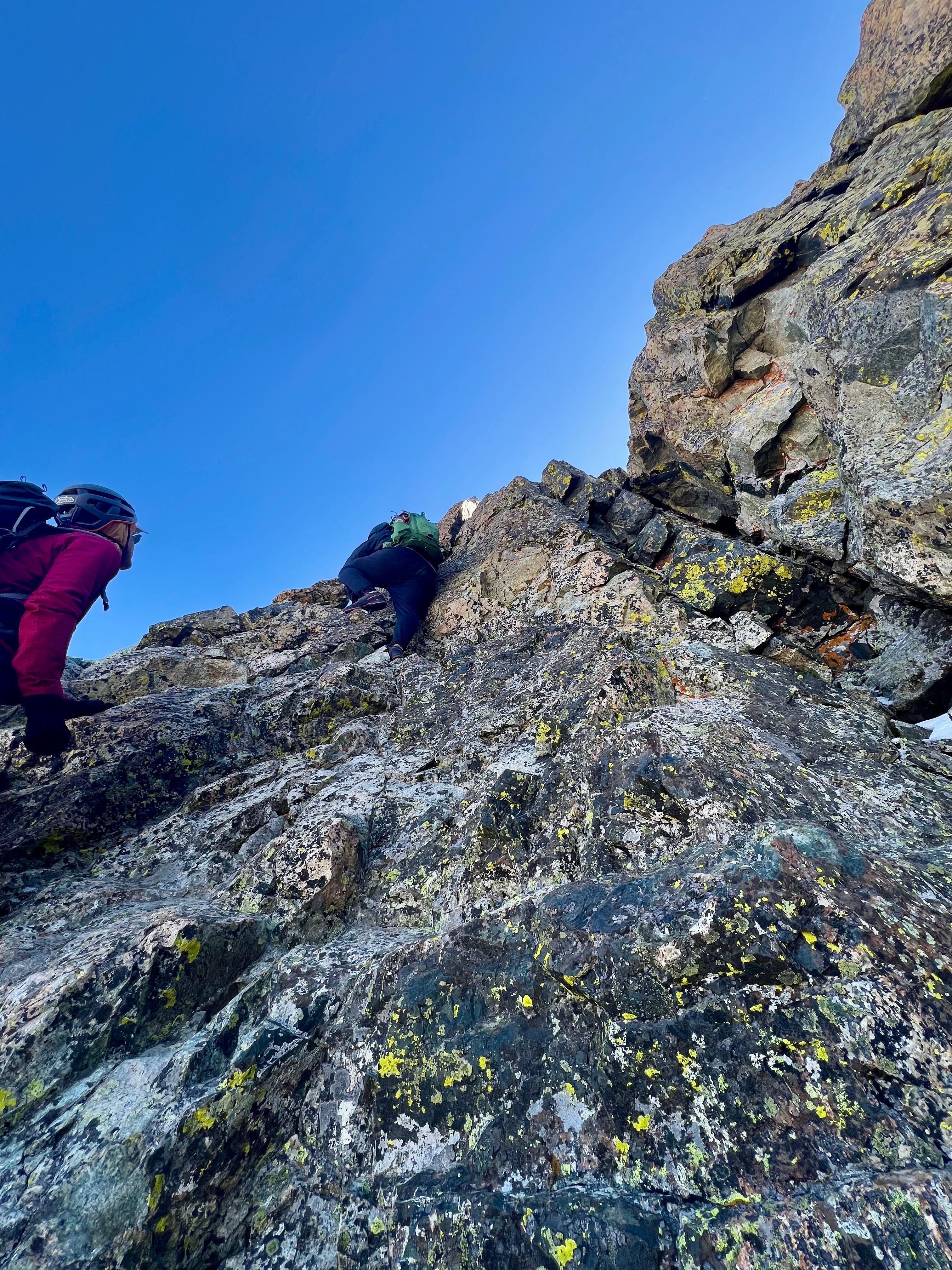
(Class 4 crux wall on ridge approach of Mount Lindsey.)
Three Ways of Managing Anxiety on Mountains
1. There’s Power in Your Mindset
Before the Climb
I don’t underestimate the power of my thoughts when it comes to my upcoming climb. Before, when I planned a big day in the mountains, my brain would start rehearsing everything that could go wrong. Now, I catch myself and reorient.
I close my eyes and start visualizing success. I picture myself on the route, having a great time. I remind myself of all the things I love about scrambling—how it gives you permission to play on rocks, the joys of problem solving, the exhilarating rush of being on the side of a mountain, the surge of confidence when you complete a hard problem.
Visualization works. There’s research to back it. It lowers cortisol levels, increases focus, and increases neuroplasticity (the nervous system’s ability to change and adapt) in the brain’s hippocampus, which is known for memory formation. Through visualization, you can build new associations with scary situations.
During the Climb
When I’m up on a ridge, it’s obviously not feasible to close my eyes and start visualizing a good time. If I start to notice my anxiety is rising while I’m actively scrambling, I either have a go-to mantra that I repeat, or I start singing inside my head.
My mantra is trust yourself. I repeat this over and over, as I’m finding my next hold, as I’m picking my line, as I’m managing the stress of exposure. Our bodies respond to what we tell ourselves. Trust yourself has a calming effect. It releases tension and allows me to focus. Oh my god, I hate this and need to get off this mountain, has the opposite effect. It stokes anxiety’s fire and makes me panic.
Sometimes I skip over the mantra and go straight to song lyrics. A woman in my scrambling course told me that she sings, Hello darkness, my old friend, over and over in her brain, and ever since that’s become my default. The dark humor is grounding for me. It snaps me from my anxiety spiral. Plus, singing is fun, and ultimately, I want to have fun while challenging myself.
2. Your Breath is Your Biggest Asset
The way we breathe can activate either the sympathetic nervous system (our fight-or-flight response) or the parasympathetic nervous system (our rest-and-digest response). When humans start to feel anxious, our breathing becomes short and shallow, signaling to our body that we are in distress. This signal prepares our body to fight by dumping cortisol and adrenaline. More cortisol and adrenaline means more anxiety.
Instead, we want to reset our nervous system and bring it into a calmer state. This is something I can do anywhere, anytime. Before the climb, during the climb, after the climb, during your snack break. All it takes is three deep breaths, inhaling for four counts and exhaling for seven. We want our inhales to be shorter than our exhales because that mirrors our breathing patterns when we are resting. By mimicking rest while climbing, we keep our cortisol and adrenaline levels lower, allowing us to think more clearly, make well-rounded decisions, focus on our moves, and connect with the mountains.
When I’m scrambling, I continue this way of breathing the whole time. Inhale for four and exhale for seven. Before, during, and after I start, I continue this breathwork because I know I’m prone to anxiety and want to be proactive in managing those emotions.
3. Zoom-In Your Focus
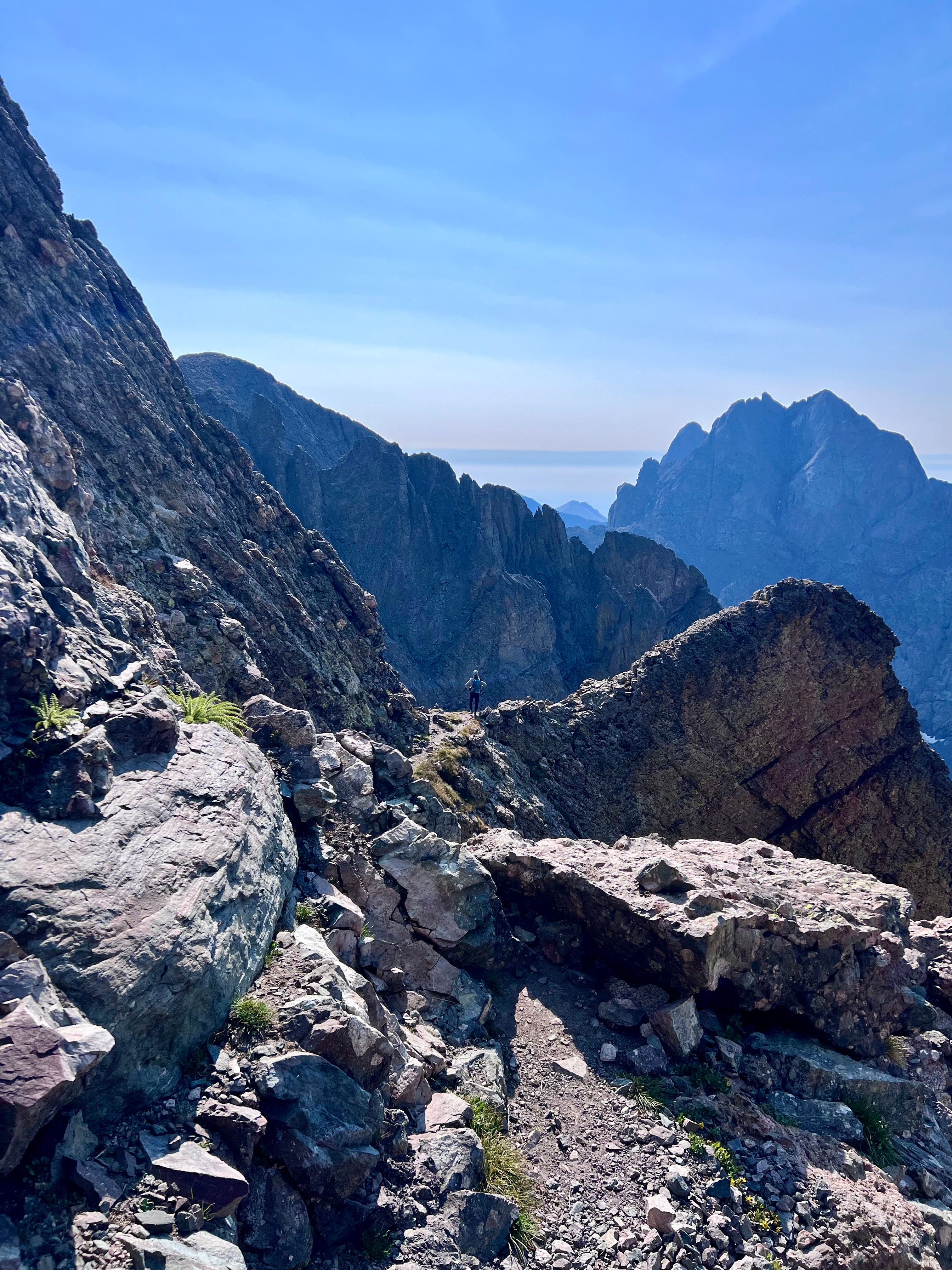
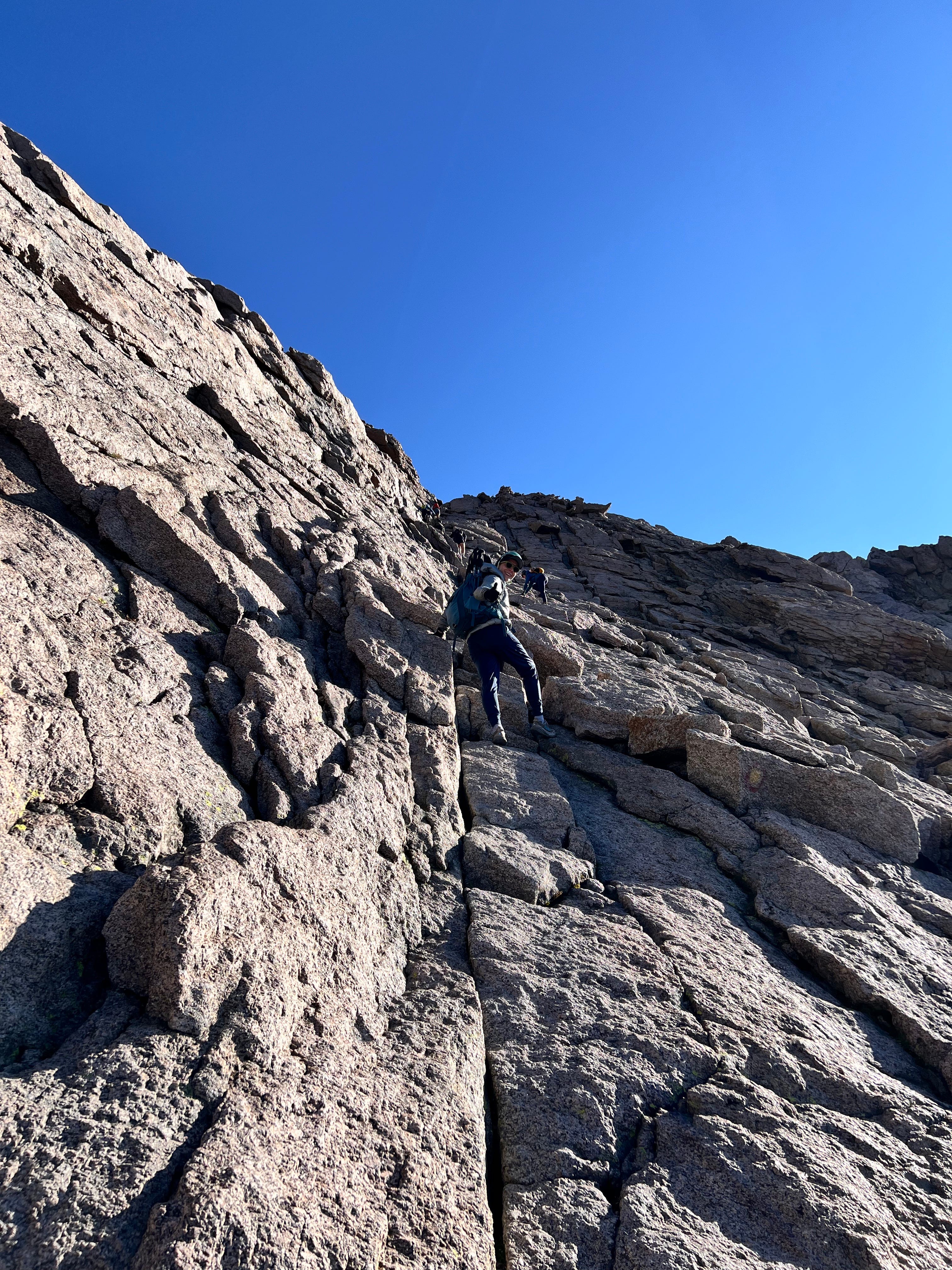
Anxiety often floods in when we zoom out too far. I’ve found it helpful to focus on my next few steps rather than the entire climb. Zooming in allows me to take the scramble in small bites, etching away at it bit by bit. When I’m up on the rocks, I just look at my hands and feet. I don’t look at the drops. I don’t look too far ahead (obviously I need to check my lines and approaches). I focus on my footing. I focus on my breathing. I focus on my hiking partner’s location.
I’ve found that being this locked-in is the feeling that keeps me coming back. I mean, how often in modern-day living do we get to be 100% focused on something? It’s beautiful. It’s addicting. And it’s calming. But getting there requires us to trust ourselves, trust our hiking partners, and trust that we’ve prepared for the route.
Closing Thoughts
These three techniques are my go-tos to manage anxiety while scrambling. All experiences are my own. Everyone has their own story, their own brain, and their own goals for big mountain adventures, so make sure to tailor the suggestions to suit you.
Start small, work your way up. The process doesn’t have to be quick. It took me years of hiking class 1 and 2 peaks before graduating to class 3s and 4s.
Thanks as always for taking the time to read. I’d love to hear from you. Do you have any strategies that have helped you?
Interesting article. Anxiety and climbing combined sounds like a paradox for most i guess.